Every bird has a loose schedule. From the first pre‑dawn calls to the last shuffle on the roost, each species follows a rhythm that rewards close watching. Learning these daily routines makes identification easier, sharpens your timing in the field, and turns familiar birds into endlessly interesting study subjects.
Introduction: Following a Bird’s Daily Script
This guide walks through a bird’s typical day, with practical tips on what to look for, when and where to look for it, and how your gear and technique can help you notice the quiet details.
Dawn: The Chorus and the Territory Check
The Pre‑Sunrise Warm‑up
Before you can see much, birds already know exactly where they are and who’s nearby.
Key behaviors:
- Soft "subsong" or tentative phrases in near‑darkness
- Shuffling from roost positions to more exposed song perches
- Short flights between key vantage points
- Robins/Thrushes: Rich, fluted songs at first light, often from treetops or rooftops.
- Sparrows/Buntings: More repetitive, rhythmic patterns from lower shrubs or fence lines.
- Wrens: Loud, complex bursts from deep cover or low tangle.
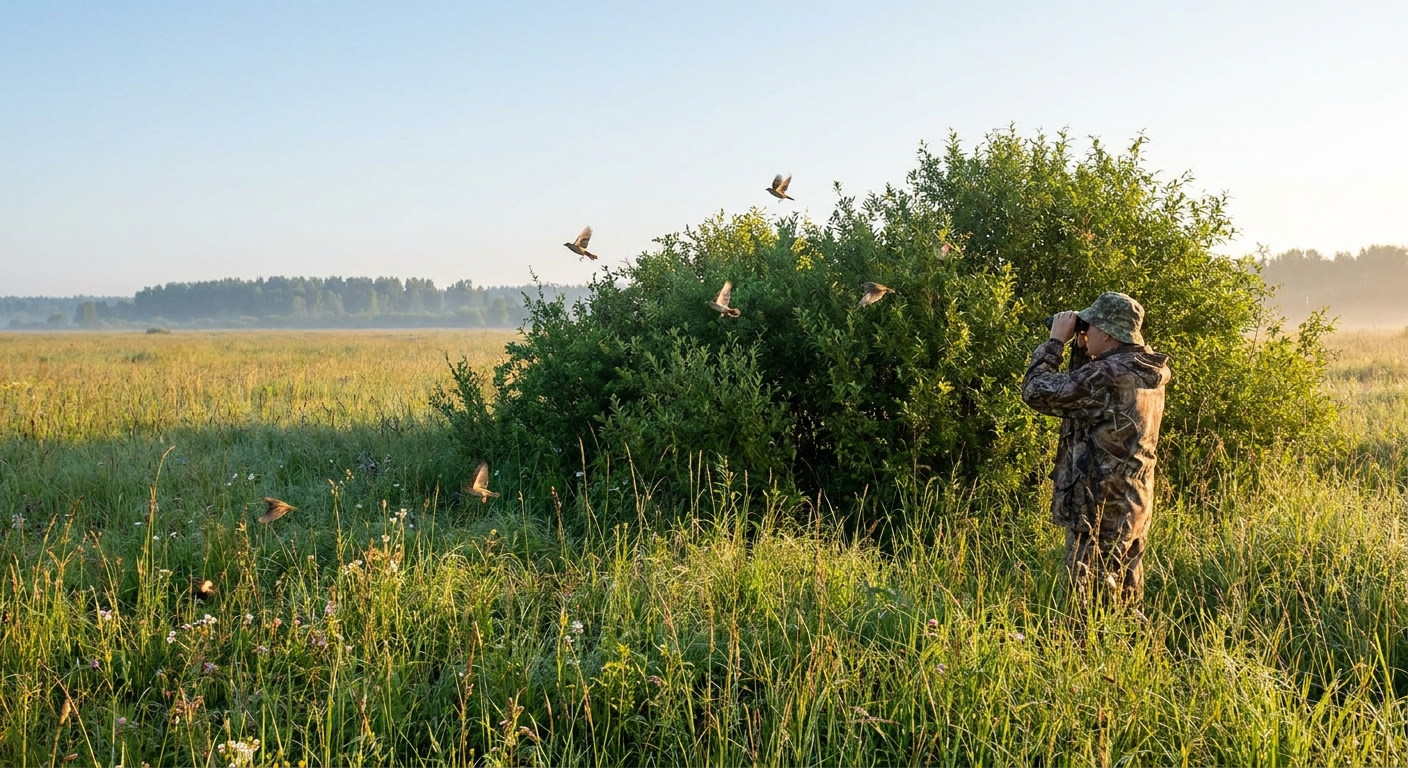
- Arrive 20–30 minutes before sunrise.
- Bring binoculars with a wide field of view (8x is ideal) to locate silhouettes on song perches.
- Use your phone or notebook to jot down the order in which species begin to sing.
ID Tips by Sound:
Field technique:
Territorial Circuits
As light improves, many males do a patrol loop:
- Singing from established waypoints: the corner of a yard, the tallest branch, a particular fence post.
- Chasing intruders: short, fast flights at birds that cross invisible boundaries.
- Repetition: A bird repeatedly singing from the same perch is easier to track and study.
- Flight style: Note how a species moves between posts—bounding finch flight vs. level, direct blackbird flight.
How this helps with ID:
Mid‑Morning: Focused Feeding and Family Business
Once the early singing tapers, feeding becomes the priority.
Foraging Styles to Watch
Ground Gleaners
- Species: thrushes, towhees, some sparrows, blackbirds, wagtails. - Behavior: hop or walk, pause, tilt head, then strike. - Clues: - Tail motion: Wagtails constantly wag; some thrushes make small tail lifts after each hop. - Body carriage: Sparrows often look shorter‑tailed and lower to the ground than thrushes.
Trunk and Branch Specialists
- Species: nuthatches, creepers, woodpeckers. - Behavior: - Nuthatches spiral down trunks headfirst. - Creepers move up trunks in short, mouse‑like hops. - Woodpeckers cling and move in bolder hops, often pausing to drum.
Hovering and Sallying Insect Hunters
- Species: flycatchers, some warblers, cisticolas, redstarts. - Behavior: - Sallying: Quick launch from a perch to grab a flying insect, returning to the same or nearby perch. - Hover‑gleaning: Short hovers at leaf clusters or branches to pick hidden insects.
Observation tip: If you can’t see plumage well, note:
- Does it return to the same perch? (Classic flycatcher behavior.)
- Does it hinge at the hips while scanning, or bob its tail? Details like these become reliable ID clues.
Family Groups and Fledgling Behavior
In breeding season and shortly after:
- Listen for continuous, thin begging calls.
- Watch adults making repeated trips from a feeding area to a hidden nest or fledgling cluster.
Field clue: Follow an adult’s path carefully without crowding the area. Note which direction it repeatedly flies with food. This triangulates nest or family location without disturbing them.
Midday: Heat Adjustment and Quiet Hours
Many birds reduce activity during the hottest, brightest hours.
Shade, Soar, or Soak
- Perch in shade: Small songbirds retreat to the interior of trees or shrubs.
- Soaring: Raptors, storks, vultures, and some large seabirds use rising thermals to gain altitude with minimal wingbeats.
- Bathing and preening: Birds may visit water sources for baths, then spend extended time preening.
- Raptors: Thermals develop late morning; ideal for identifying silhouettes and soaring styles.
- Broad‑winged and Buteo hawks: broad wings, slow circling.
- Swifts and swallows: more rapid scything arcs and agile direction changes.
- Water’s‑edge birds: Heat shimmer can be an issue, but midday often reveals relaxed behavior: loafing, stretching wings, social spacing.
- A spotting scope with a sunshade is valuable near water or open fields.
- A wide‑brimmed hat and light clothing make it easier to watch comfortably and stay still longer.
Midday ID advantages:
Gear notes:
Afternoon: Subtle Shifts and Feeding Rounds
As the temperature drops, activity ramps back up.
Rotating Feeding Circuits
Many birds follow semi‑predictable loops:
- Flowering trees to insect‑rich hedges to favored perches.
- Field edge to hedgerow to garden.
- Choose one individual bird (e.g., a particular wagtail, robin, or shrike) and time its circuit.
- Note how long it takes to return to the same spot, and what it does at each stopping point.
Practice exercise:
Social Interactions
- Loose flock formation: Some birds start gathering at favored pre‑roost trees or feeding sites.
- Displays: Courtship in breeding season, or dominance shuffles at feeding areas.
- Shrikes often perch high and motionless, then drop to the ground or onto a bush for prey, returning to the same vantage.
- Pipits and larks show more ground‑based walking and fluttering flights.
Identification by behavior:
Dusk: Pre‑Roost Routines and Last Calls
Roost Assemblies
Many species become highly visible in the last hour of light.
Look for:
- Swallows and martins: Hawking over water or fields, then funneling into reedbeds or under bridges.
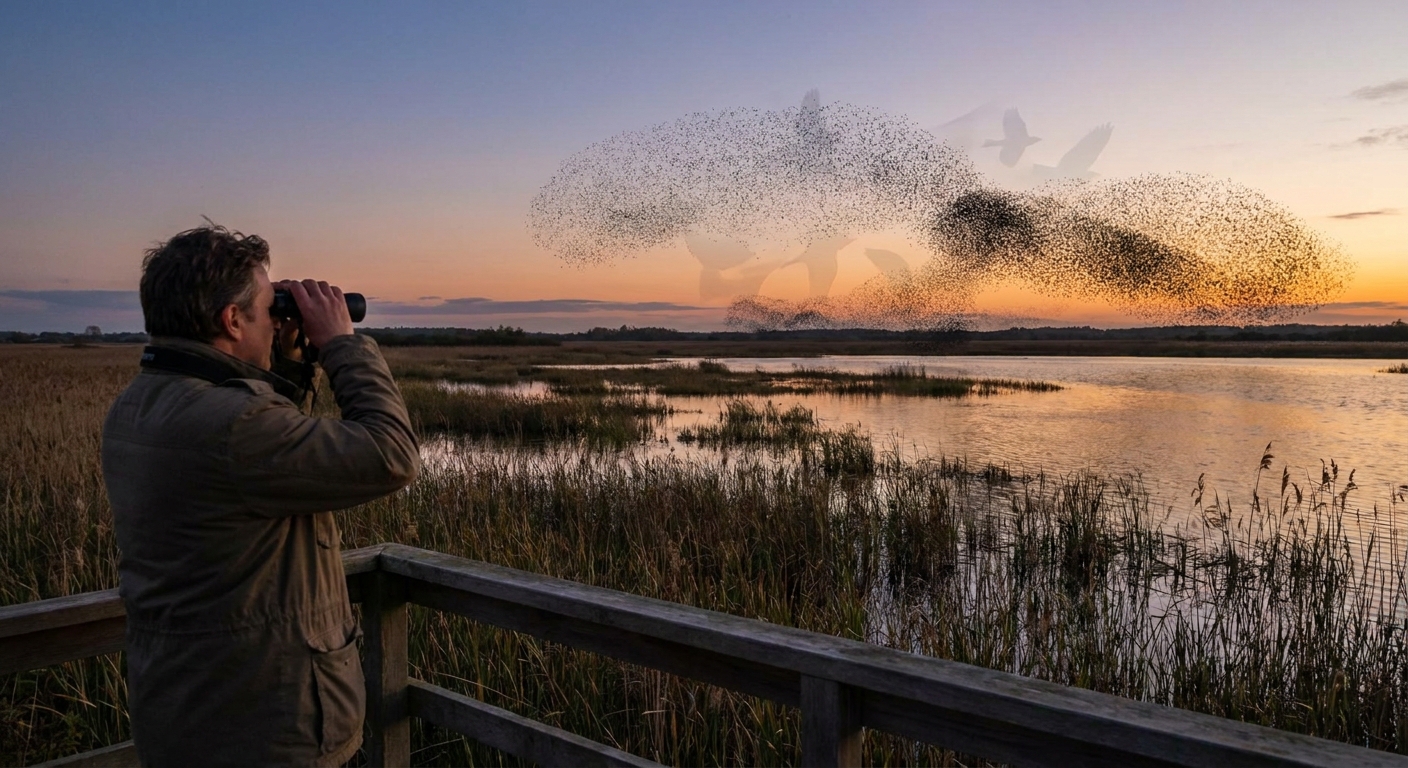
- Crows, rooks, and starlings: Forming noisy, directional flights to large communal roosts.
- Waders and waterfowl: Shifting from feeding flats to safer high‑tide roosts.
- Strong backlighting can turn even common birds into silhouettes—but silhouettes tell you:
- Relative size within a mixed roost tree.
- Tail length and wing shape on approach.
- Characteristic formation shapes (V‑lines for geese vs. disorganized clouds for starlings).
ID advantages:
The Evening Soundscape
- Song decreases, but contact calls and roost chatter increase.
- Owls, nightjars, and rails begin their vocal period.
- Choose a vantage point near known roosts (reedbeds, lines of tall trees, building ledges).
- Arrive 45–60 minutes before sunset.
- Use binoculars, not bright flashlights; allow your eyes to adapt to lower light.
Field technique:
Night: Quiet Movements and Hidden Migrations
Even in apparently still nights, birds may be on the move.
Nocturnal Migration
Many passerines migrate at night.
- You may hear short flight calls overhead.
- City lights, especially around tall buildings, can attract migrants into view.
- Avoid shining strong beams directly at birds.
- Where possible, support initiatives that reduce unnecessary nighttime lighting during peak migration.
Ethical note:
Night‑Active Specialists
- Owls: Patrolling hunting routes along forest edges and fields.
- Nightjars: Aerial insect hunters, often seen along roads and open clearings.
- Owls: silent, buoyant, direct flights, often low and hugging edges.
- Nightjars: fluttery, moth‑like flight with long wings and sudden turns.
ID by behavior:
Red lights or low‑intensity headlamps angled away from birds help preserve your night vision without causing undue disturbance.
Habitat Context: Same Time, Different Scripts
At the same hour, different habitats host different daily dramas.
Forest Edge vs. Deep Woods
- Edges:
- Faster warming at dawn, earlier insect activity.
- More visible flycatching, swallows, and edge‑loving sparrows or warblers.
- Interior:
- Later peaks in activity.
- More trunk and canopy specialists, more echoing song.
Farmland and Grassland
- Dawn: displaying larks and pipits, skylarking flights, ground singing posts.
- Mid‑day: raptors using thermals, corvids and gulls working for scraps.
- Dusk: flocks of buntings, finches, or blackbirds commuting to roost.
Wetlands and Shorelines
- Tides and water levels overlay the daily rhythm.
- High tide (day or dusk) often concentrates birds into tight roosts—great for watching subtle interactions.
- Low tide reveals feeding strategies: probing, pecking, sweeping bills, or chasing fish.
Gear and Note‑Taking for Daily Behavior Study
Essential Gear
- Binoculars (8x recommended): Wide field of view helps track moving, active birds.
- Small notebook or field journal: Jot time, weather, and short behavior notes.
- Watch or timekeeping app: Time of day is central to understanding routine.
- Optional: Compact spotting scope for waterbirds, camera for reviewing posture and interaction details.
Simple Note Templates
Create repeatable structures, for example:
Time‑Behavior Snapshot
- Time:
- Species (or best guess):
- Habitat:
- Main behavior (singing/foraging/preening/roosting/migrating):
- Notable details (perch type, height, companions, interactions):
Over multiple visits, patterns emerge: when a species tends to sing, feed, bathe, or gather.
Turning Routine into Discovery
Following the daily cycle of even one common species—say, a neighborhood robin or magpie—sharpens your observational skills. With time you’ll begin to predict where birds will be and what they’ll be doing at given hours and seasons.
Use your optics, your ears, and a simple notebook to track behavior from first light to nightfall. The more you learn to read a bird’s daily script, the more every walk becomes an unfolding story, even in the most familiar patch of ground.