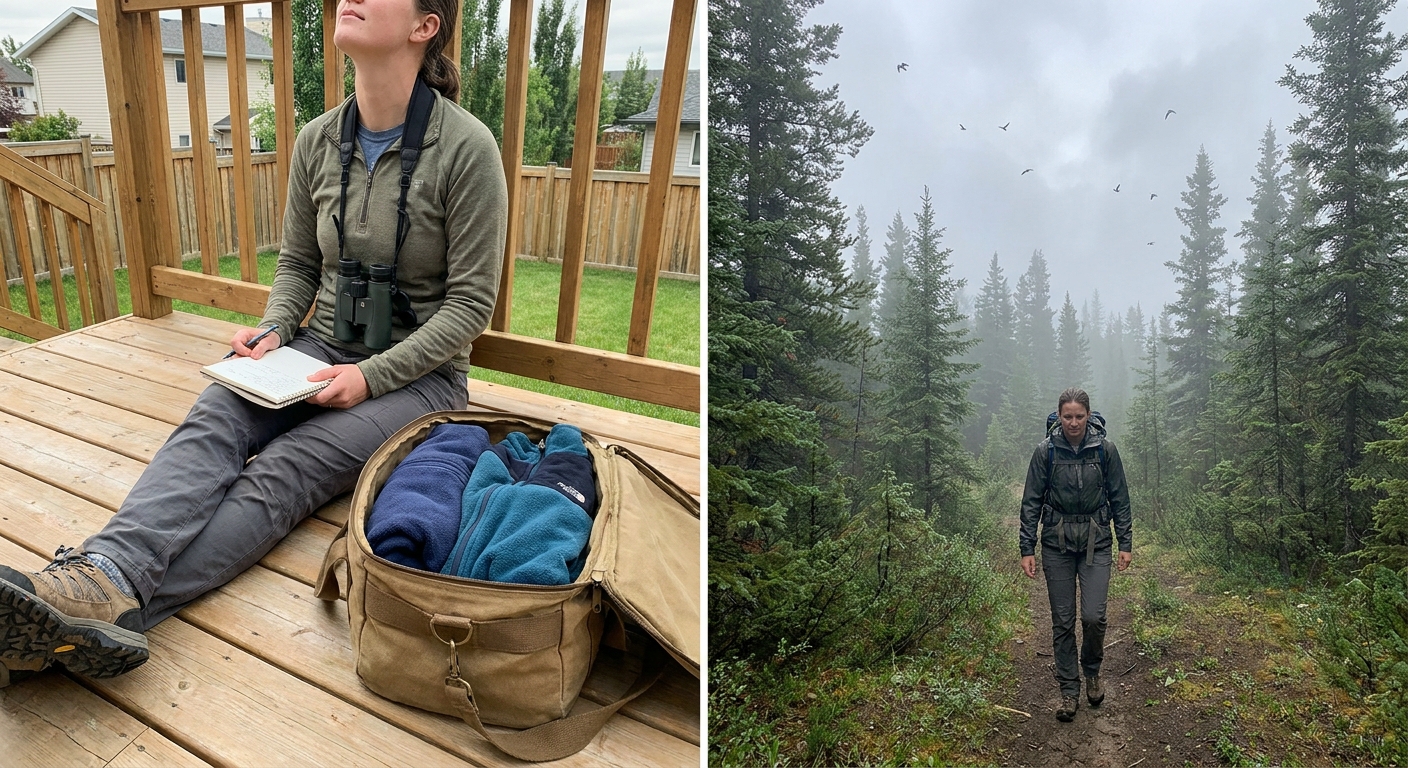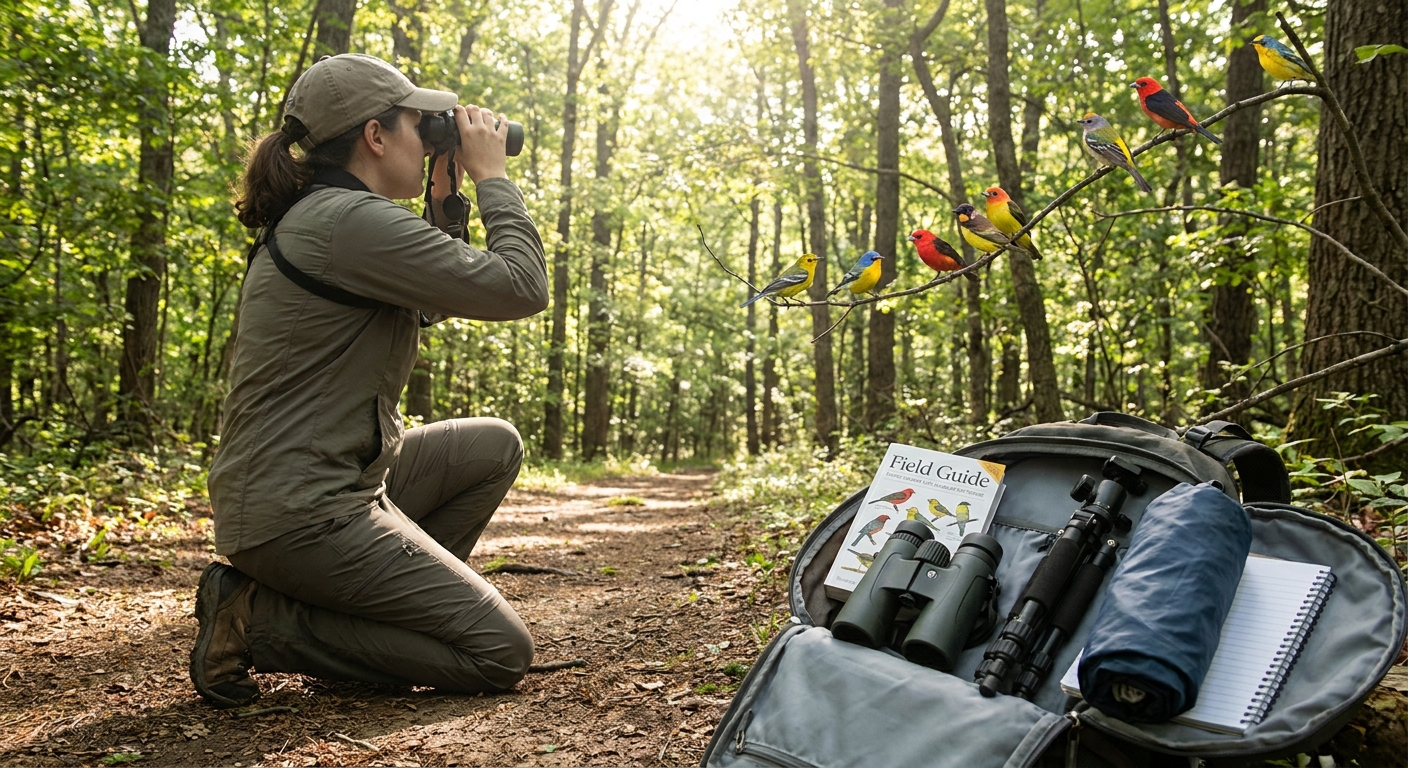
The first time you miss a life bird because you can’t get your binoculars to focus, you realize birding gear isn’t just an accessory—it’s your link to the birds themselves. The right setup helps you read subtle field marks, notice behavior, and stay out long enough to witness those quiet, magical moments when shy species finally reveal themselves.
Why Your Birding Gear Matters More Than You Think
This guide walks through a habitat-by-habitat kit, with an emphasis on how each piece of gear supports better identification skills and sharper observation in the field.
Core Optics: Your “Field Guide for the Eyes”
Choosing Binoculars You’ll Actually Carry
The best binoculars are the ones you keep around your neck, not in your closet. Aim for:
- Magnification & objective lens: 8×32 or 8×42 is ideal for most birders.
- 8× offers a wider field of view, easier tracking of moving birds, and brighter image at dawn/dusk.
- 10× can be useful for shorebirds or raptors at distance, but magnifies hand shake and narrows your field.
- Field test: Point at a perched bird (or a distant sign). Can you lock focus quickly? Is the image bright edge-to-edge? Do colors look natural, not overly warm or cool?
Field note: In backlit forest canopy, 8×42 glass can reveal the faint lemon wash on a Pine Warbler’s belly that cheaper optics will wash out to gray.
Spotting Scopes: For Open Country and Water
You don’t need a scope to start birding, but they transform how you see distant birds in open habitats.
- Key in shorebird season: Spring and fall at mudflats, use 20–60× zoom to pick out subtle details—like the slightly drooping bill of a Stilt Sandpiper among yellowlegs.
- Raptor watching: On a hawk watch platform, a scope lets you study tail shape, wing posture, and molt patterns that are invisible with binoculars.
Prioritize a stable tripod with a fluid head; shaky views erase the advantage of good glass.
Seasonal Layering: Clothing as Stealth Gear
Spring & Fall: Quiet, Layered, and Weather-Savvy
Birds notice motion and shape more than color, but bright, reflective clothing can still stand out. Choose:
- Muted earth tones to blend into woodland edges and reedbeds.
- Soft, non-rustling fabrics so your jacket doesn’t announce you every time you raise your binoculars.
- Layering system: base (wicks sweat), mid (insulates), shell (wind/rain). This lets you stay still longer—key for skulking sparrows and warblers.
Identification payoff: The longer you can stand still, the more behavior you’ll see—tail pumping in a Spotted Sandpiper, or the creeping, mouse-like movement of a Wrentit in brush.
Summer Heat: Staying Cool Enough to Observe
- Wide-brim hat: Protects from sun and cuts glare when scanning water.
- Lightweight long sleeves: Better than bare arms in buggy habitats; they reduce distraction from biting insects so you can concentrate on field marks.
- Neck gaiter or bandana: Damp it with water in desert or grassland habitats to stay out longer.
Winter Birding: Dexterity vs. Warmth
Cold fingers are the enemy of fine focus.
- Glove system: Thin liner gloves plus windproof mitts you can fold back. You can manipulate focus wheels and camera buttons without exposing bare skin for long.
- Insulated boots: Essential for frozen marsh edges where you might linger to separate a Common from a Barrow’s Goldeneye by head shape and facial patch.
Sound Gear: Hearing Is Half of Birding
Field-Ready Audio Tools
You don’t need a professional recording setup to sharpen your ear.
- Small digital recorder or recording app: Capture short clips of unknown songs for later study.
- In-ear headphones: Helpful when reviewing recordings with a field guide app that shows sonograms.
Tech tip: When recording an unknown bird, speak a quick note after the song: date, habitat, behavior (“July 5, spruce bog, bird 10 m up, staying hidden”). Those details can be as valuable as the audio.
Identification Payoff
By pairing gear and listening, you’ll learn to:
- Separate a Chipping Sparrow’s dry trill from a Dark-eyed Junco’s more musical trill by recording both and comparing.
- Notice how the song of a Song Sparrow changes between marsh and upland habitats—same species, different dialects.
Field Guides and Apps: Selecting Your “Paper Gear”
Print Field Guides: Still Essential
A good field guide remains a cornerstone of birding gear.
- Regional guides reduce clutter and help you focus on what’s likely.
- Illustrated guides are great for learning field marks; paintings can emphasize critical differences.
- Photo-based guides show real-world variation and can help when a bird looks “off.”
Mark your guide with sticky tabs for challenging groups: gulls, sparrows, shorebirds. In the field, compare the bird’s structure and behavior first, then plumage.
Apps: Portable Encyclopedias
- Bird ID apps: Offer quick reference, range maps, and multiple songs/calls per species.
- Sonogram views: Seeing the shape of a song while you listen clarifies differences between similar trills and chips.
Use apps after observing; don’t let the screen steal time from the bird.
The Daypack: Smart Storage for Focused Observation
Essential Compartments
A compact daypack keeps gear accessible so you aren’t fumbling when a rarity appears.
Include:
- Binocular harness or strap: Relieves neck strain on long walks.
- Lens cloth & brush: Clean fog, fingerprints, and pollen from lenses. A single smudge can blur the eye line you need to separate a Willow from an Alder Flycatcher.
- Small notebook & pencil: Jot structure, behavior, and habitat notes—"thin bill, tail flicking down, foraging low in cattails." These matter later.
- Field-friendly snacks & water: More time outside means more chances for that unexpected flock.
Habitat-Specific Additions
Forests and Woodlots
- Compact headlamp: Dawn and dusk birding often starts or ends in the dark.
- Bug net or repellent: Mosquitoes are loud; their presence can rush observations.
Wetlands and Shorelines
- Waterproof notebook: For notes in drizzle and mist.
- Small sit pad: Useful when staking out a rail or bittern in reeds.
Grasslands and Deserts
- Sun protection kit: Extra sunscreen, lip balm, extra water.
- Lightweight sit cloth: To watch displaying larks or pipits without sitting directly on hot, rough ground.
Camera Gear: Recording What Your Eyes Can’t Hold
You don’t need a big lens to be a real birder, but simple photo gear can support identification.
- Compact camera or phone with zoom: Useful for documenting distant or unfamiliar birds.
- Phone adapter for your scope (digiscoping): Lets you capture distant gulls, raptors, or waterfowl for later study.
ID payoff: Photos freeze moments your brain might blur—like the exact angle of a vulture’s wings in flight or the tail pattern on a quickly flushing sparrow.
Technique: Using Your Gear to See More
The Binocular Sweep
- Spot with naked eye first. Lock your eyes on the bird.
- Bring binoculars to your eyes without looking down. This keeps the bird in view.
- Refine focus slowly. Start with the background, then roll toward sharp focus on the bird.
Practice on distant signs or perched crows; speed and accuracy here often mean the difference between guessing and knowing.
Building a Mental Checklist
Use your gear to support a consistent observation routine:
- Optics: Note shape, size, posture before color.
- Audio tools: Record or repeat the song rhythm in your head.
- Notebook: Jot habitat, flock size, and behavior.
- Guide/app: Confirm only after you’ve observed.
This habit keeps you curious and rewards careful observation every time you step outside.
Final Pack-Through: A Versatile All-Season Kit
For birders of any level, a strong, all-purpose gear set includes:
- 8×32 or 8×42 binoculars with comfortable strap or harness
- Seasonal, quiet clothing and reliable footwear
- Compact daypack with water, snacks, notebook, and lens cloth
- A trusted regional field guide plus a well-chosen birding app
- Simple audio tool (recorder or phone app) to capture songs and calls
- Optional scope and tripod for wetlands and open country
With each piece chosen to support clear views and calm observation, your gear becomes more than a checklist of items—it becomes an invitation to notice. The soft rustle of a sparrow in grass, a faint wing whistle overhead, the brief flash of a tail pattern at the forest edge: the more your gear disappears into the background, the more the birds come into focus.